A refractometer reading is the simplest field measure of plant health, quality and pest resistance.
°Brix (°Bx) is the sugar content of an aqueous solution. We measure a plant’s °Brix by squeezing sap from any part of it onto a refractometer and reading the refractive index.
The higher the reading, the healthier and stronger the plant. High-°Brix tissue produces more alcohol from fermented sugars, so higher-°Brix plants resist predatory insects that can’t process them.
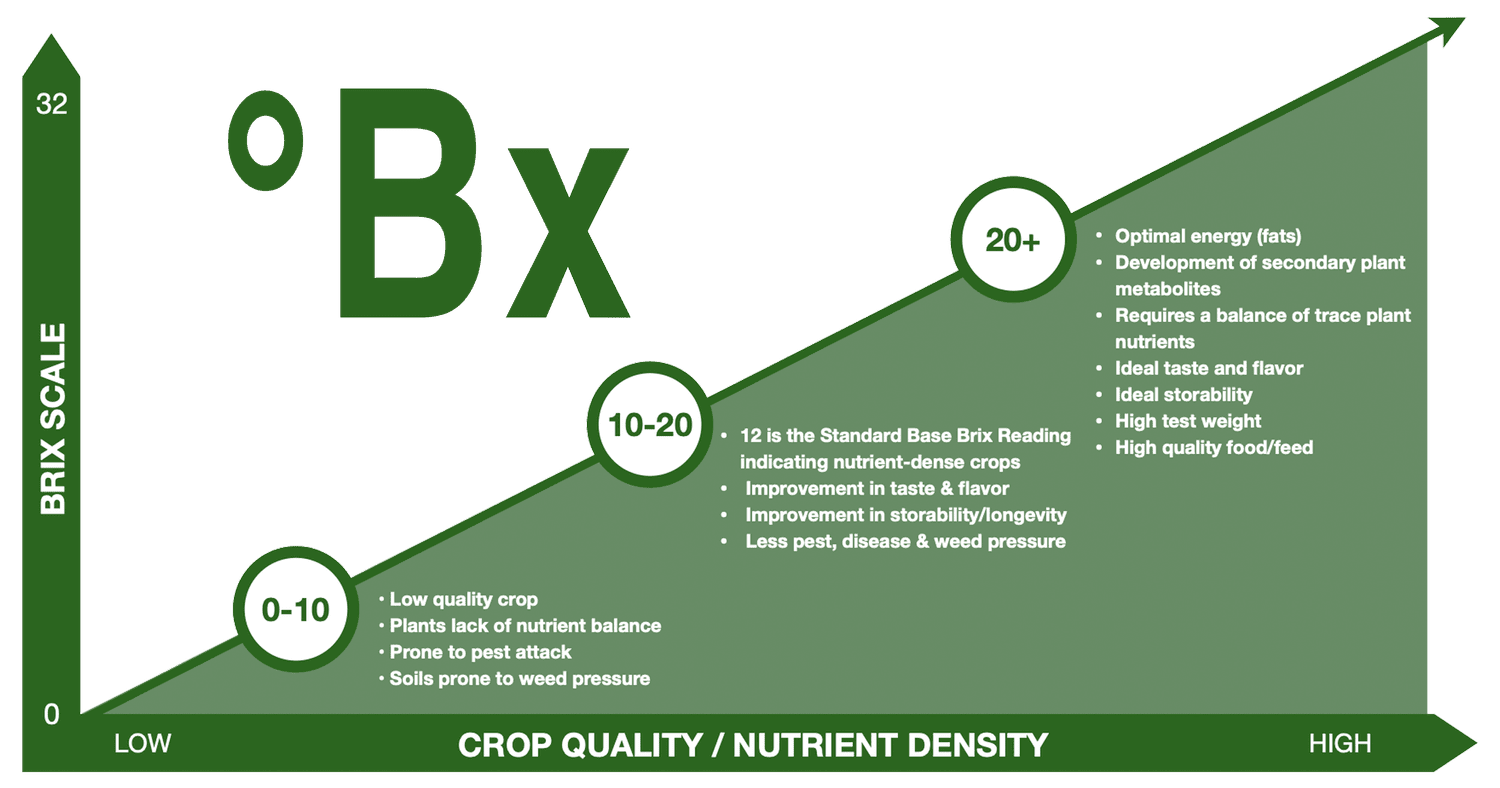
12 is the standard base reading for nutrient-dense crops. Better taste, longer storage, less pest, disease and weed pressure.
This is a general scale. Healthy ranges vary by crop.
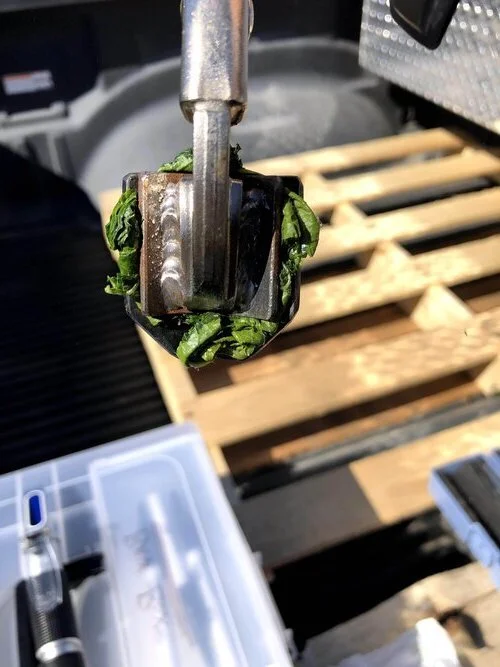
A plant functioning at its genetic potential has high °Brix. Measuring °Brix often predicts problems before they develop into yield losses or drag.
In general, plants reading 3–5 points higher than average resist most sap-sucking insects: aphids, spider mites, leafhoppers, whiteflies, leaf miners, cucumber beetles, squash bugs, potato beetles and others.
Healthy ranges vary by crop. Urth takes regular °Brix readings on the crops we treat as part of our data collection.
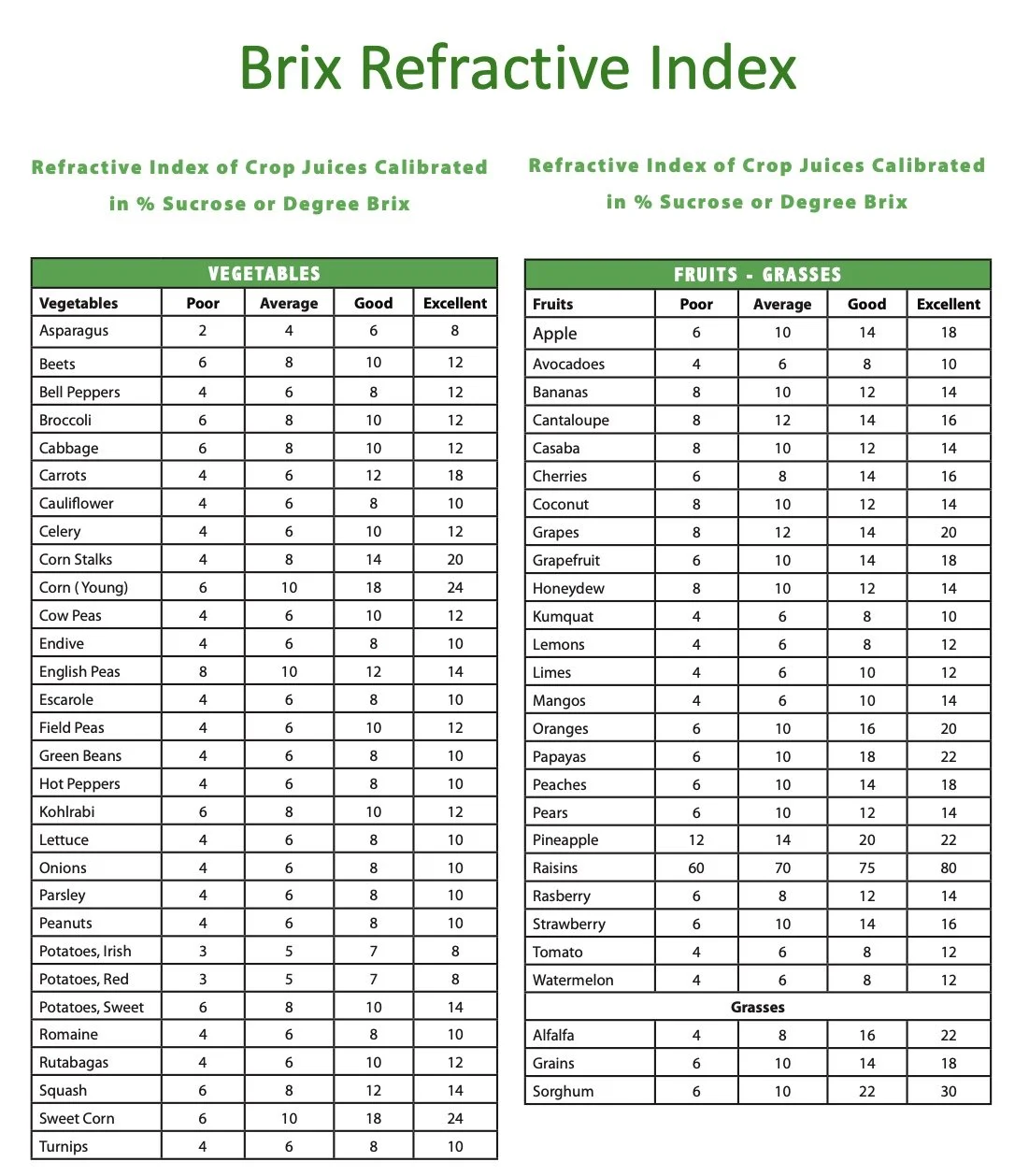
This refractive index chart lists poor, average, good and excellent °Brix readings for common fruits, vegetables, grasses and grains.
Growers consistently report record-high °Brix on the SOM protocol, and Pro Guard Foliar mimics high °Brix to keep pests away.